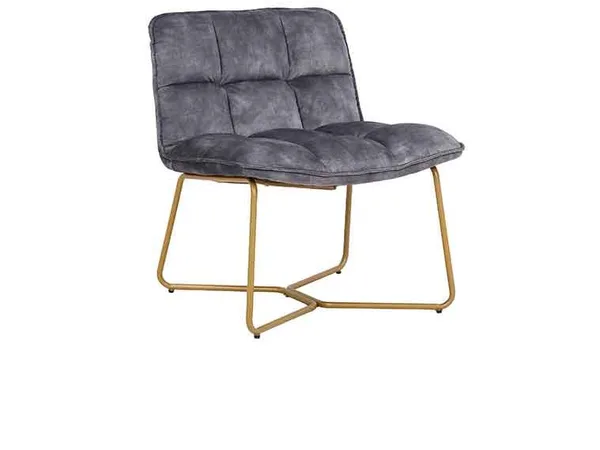
Everything we make is held together by welds, and a metal chair or bed frame is only as strong as its weakest joint. The hard part for a buyer is that the worst weld defects disappear the moment the frame is powder-coated — a smooth painted joint can hide porosity that will crack open under load. So weld inspection has to happen before paint, on bare metal, and it is worth knowing what we are actually looking for.
The defects that matter on a frame
On the MIG welds we use for metal-frame chairs and bed frames, the recurring problems are a short list. Porosity is gas bubbles trapped in the bead — it comes from contamination (rust, oil, leftover paint) or poor gas shielding, and it weakens the joint. Lack of penetration means the weld did not fuse deep enough into the base metal, so the joint looks fine and is hollow underneath. Undercut is a groove melted into the base metal at the weld edge that becomes a stress riser. Incomplete fusion and slag inclusions round out the list. Any of these can pass a glance and fail a fatigue cycle.
Spot welds, MIG and where each belongs
Not every joint on a frame should be welded the same way, and a factory that uses one process everywhere is usually optimising for its own convenience rather than the frame. Spot welding joins overlapping sheet or light tube fast and clean and is fine for low-stress connections, but it does not develop the strength of a proper fillet weld where a leg carries the seated load. MIG (gas metal arc) is our workhorse for the structural joints on metal-frame chairs and bed frames because it lays a continuous bead with good penetration on thin wall when the heat is controlled. The judgement is matching the method to the load path on each joint: spot or tack where it is cosmetic or low-stress, a full MIG fillet where the joint carries weight or takes a folding cycle. When a buyer asks why two visually similar chairs are priced apart, the answer is often hidden right here in which joints got a real weld and which got a quick tack.
How the defects get prevented, not just caught
Most weld problems are upstream of the welder. Porosity in particular is usually a cleanliness or shielding issue: the joint has to be clean of rust and grease before the arc, and the shielding gas flow has to be in the right band — roughly 25 to 40 CFH — with the nozzle close enough to actually shield the puddle. We control the prep and the gas because it is far cheaper to prevent porosity than to grind out a bad joint after the fact. Catching it after powder coat means scrapping a finished part.
Why thin-wall furniture tube is harder to weld than it looks
There is a reason a good furniture welder is worth keeping. Chair and bed frames use thin-wall tube — often around 1.2 to 1.5 mm — and thin wall is unforgiving. Too much heat and the arc burns straight through the tube, leaving a hole that has to be filled or scrapped; too little and you get the lack of penetration that looks fine and fails later. The window between those two is narrow, and it shifts with the joint geometry, so a T-joint where a leg meets a seat rail welds differently from a butt joint in the same frame. This is why we do not chase the cheapest welding labour: a frame is only as good as the operator's control of heat on thin wall, and that is skill, not just equipment. Automated or jig-fixtured welding helps on high-volume runs because it holds the geometry and heat input consistent joint to joint, which is exactly what kills the batch-to-batch variation a buyer fears.
What inspection looks like, and what you can ask for
Our first line is visual inspection on bare frames — every joint, before finishing — backed by destructive pull tests on sample frames from a run, where a joint is loaded until something gives so we can see whether the weld or the tube fails first. The result we want is the tube deforming before the weld lets go; if the weld fails first, the joint was the weak link and the parameters get corrected before the run continues. For buyers who need it, non-destructive testing can be arranged on a sampling basis. Here is the honest trade-off: full NDT on every joint of every unit is real cost and real time, and for a standard chair run it is over-testing. For a safety-critical or high-volume contract, a documented sampling plan is reasonable, and we will quote it rather than wave it away.
What you can ask any supplier — including us: how welds are inspected, whether it happens before or after coating, and whether pull-test or NDT records can be shared for your run. We build to BIFMA / EN methods and testing can be arranged per order. Tell me your program's risk level and I will propose an inspection plan that fits it. Reach us via contact, see capability on the about page, or email [email protected].