The first time a buyer hears about ganging is usually from a fire marshal, not from a furniture catalog. They order a thousand chairs for a hall, the venue gets inspected, and the report says the seating must be fastened together in rows. Then they come back to the factory asking what a ganging connector is and why their chairs do not have one. Better to have that conversation before the container ships, so here is the factory version.
Why rows are a safety rule, not a styling choice
In an emergency, people push between seats toward the exits. A loose chair that gets shoved into an aisle becomes an obstacle, and a row of loose chairs collapses into a pile exactly where the crowd needs to move. That is why US life-safety codes built on the NFPA 101 model require loose seating in larger assembly occupancies to be fastened together in groups — the commonly applied trigger is a couple of hundred seats, with chairs linked in groups of three or more. European venues lean on national assembly-hall rules with the same logic. The details vary by jurisdiction and the venue's own license, so the venue operator — not the chair factory — owns the final word. But the practical consequence for a buyer is simple: if your chairs are going into a hall, a church, a conference center or a banquet room that seats crowds in rows, assume linked rows will be demanded and spec the connector from day one.
The connector types we actually build
Three families cover most of the market. Hook-and-loop frame connectors are steel hooks welded or bolted to one side of the frame that drop over a catch on the neighbouring chair. They are fast, nothing to lose, and they suit metal-frame banquet chairs that live in rows for days at a time. Clip-on leg connectors are separate plastic or steel pieces that join adjacent legs. They make any chair gangable, which sounds like the win — but they are loose parts, and a venue loses a percentage of them every event. Ask any rental house what their reorder line looks like. Integrated fold-flat links on folding chairs swing out of the frame when needed and stow when the chair is stacked. They cost more per chair, lose nothing, and they are what we steer high-turnover venues toward on our folding chairs.
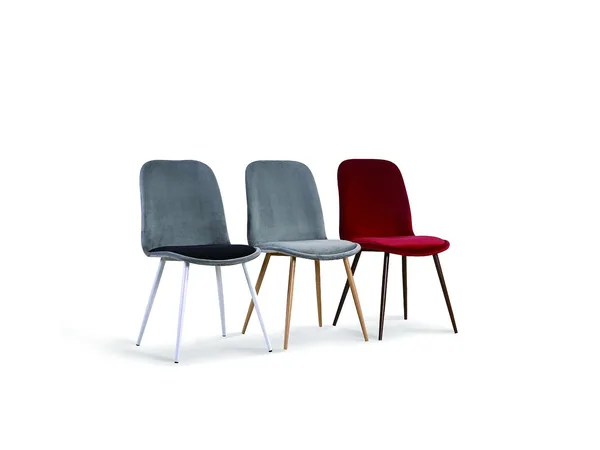
The honest trade-off: separate clips are cheapest at purchase and most expensive in year three; integrated links are the reverse. A chair that gets ganged twice a year does not justify integrated hardware. A chair that lives in rows should never depend on loose parts.
What the row standard actually tests
Europe has a dedicated standard for this hardware: EN 14703 covers links for non-domestic seating joined in a row, with strength requirements and test methods. The tests pull and push linked chairs against each other the way a crowd does — loads that try to separate the row and loads that rack it sideways. A connector that just locates the chairs is not the same as a connector that holds them under force, and the difference shows up in exactly the emergency the rule exists for. Our row hardware is built and tested to EN 14703 methods, and third-party lab testing can be arranged per order if your venue or insurer needs the report on file. The chairs themselves are built and tested to BIFMA / EN seating methods — the row link is an extra test, not a substitute for the seat tests we covered in the load standards note.
The operational details that decide the order
Connectors interact with everything else the chair does, and this is where specs go wrong. Ganging hooks on the frame side add width — link fifty chairs and the row grows by the sum of the hook offsets, which matters in a hall measured for aisle widths. Hooks can also collide with stacking: a chair that stacks ten high bare may stack six high with side hooks, and that changes your trolley count and your storage room, the same math we walked through in our stacking and storage note. Then there is flip time: staff link and unlink every row at every changeover, so a fiddly connector costs minutes per row, every event, forever. When we sample row hardware we time an untrained person linking ten chairs — it is a better predictor of venue satisfaction than any catalog photo.
Plan the spares at order time, too. Clip-on connectors should ship with a 5–10% overage in the first container, because replacements ordered later travel as a tiny, expensive air parcel instead of riding along free in sea freight. And if your chairs are powder-coated, order the connectors finished in the same batch — a hook coated a year later under a different powder lot will not match, and on a thousand visible frame hooks the mismatch is something venue managers genuinely complain about.
What to put in your enquiry
Five lines save a re-quote: the venue type and seat count (so the code question is visible early); rows fixed for seasons or flipped daily; stacking requirement with connectors fitted; whether the venue needs a linking-strength test report; and the floor surface, because some venues also require row-end floor fixing. With those answered we can spec hook, clip or integrated linkage and quote honestly instead of guessing high. Send them through our contact page, browse the product range first, or email [email protected] — and if the order is custom, our OEM / ODM page shows how connector samples get approved before bulk.